The hip replacement that works between the muscles, not through them.
In traditional hip replacement, major buttock or thigh muscles are detached and re-sewn. With the Direct Anterior Approach (DAA), your surgeon works through natural muscle planes without cutting a single tendon. Patients walk hours after surgery, sit cross-legged on the floor, and face zero dislocation restrictions.
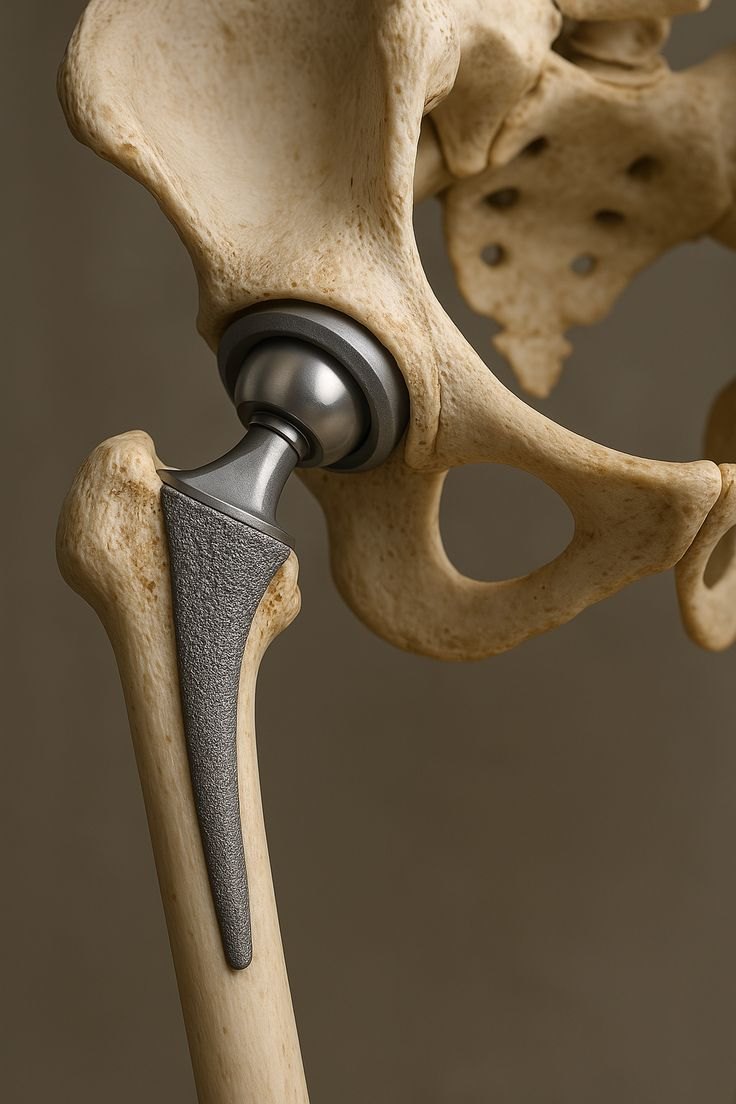
Direct Anterior Approach (Front)
Enters via the natural Hueter intermuscular gap between Tensor Fasciae Latae and Sartorius. Zero muscles divided. Rapid stabilization and immediate full weight-bearing.
Traditional Posterior Approach (Back)
Must cut through gluteus maximus fibers and detach the short external rotators (piriformis, obturator). Requires 6-12 weeks of restricted bending to prevent posterior dislocation.
Three hip conditions where DAA changes everything
Most hip replacements in older adults treat routine osteoarthritis. However, in younger active patients, hip destruction is frequently caused by AVN, post-COVID steroid exposure, or sickle cell disease. Here is how DAA delivers superior joint preservation.
Avascular Necrosis (AVN)
When the blood supply to the femoral head is disrupted, the bone cells die and structural collapse occurs. While core decompression may help in early Stage 1-2, collapsed Stage 3-4 requires definitive DAA total hip replacement to restore pain-free native mobility.
- High prevalence in patients aged 22–45
- Ceramic-on-ceramic bearings for 30+ year lifespan
Post-COVID Steroid Hip
Life-saving dexamethasone and methylprednisolone doses administered during severe COVID-19 pulmonary crises triggered bilateral osteonecrosis in thousands of young individuals 6 to 18 months post-recovery.
- Often presents as dull groin or referred knee pain
- Bilateral single-stage DAA treats both hips in 1 session
Sickle Cell Hip Disease
Sickled red blood cells cause recurrent vaso-occlusive micro-thrombi within the delicate lateral epiphyseal arterial network, resulting in premature arthropathy. DAA minimizes systemic surgical trauma and blood loss.
- Strict pre-op target: HbS levels below 30%
- Significantly reduced post-op crisis risk
How DAA compares to other surgical approaches
| Feature / Metric | Direct Anterior (DAA) | Posterior Approach | Direct Lateral (Hardinge) |
|---|---|---|---|
| Incision Location | Front of hip (8–10 cm) | Curved behind buttock (12–18 cm) | Side of the thigh (12–15 cm) |
| Muscles & Tendons Cut | ZERO (Intermuscular Plane) | Short external rotators, capsule | Gluteus medius & minimus divided |
| Dislocation Risk Rate | < 0.5% (Natural joint stability) | 2.0% – 4.5% (Posterior capsule breach) | 1.0% – 2.0% |
| Post-Op Movement Limits | None (Full 90°+ flexion permitted) | Strict: No bending past 90°, no crossing legs | Moderate abduction precautions |
| Day 1 Floor Sitting Ability | Yes (Permitted as comfort allows) | Prohibited for 3 months | Restricted due to abductor healing |
| Real-Time X-Ray Check | Yes (Supine fluoroscopy ensures 1mm accuracy) | Rarely possible in lateral decubitus | Difficult in lateral position |
| Limping Risk (Trendelenburg) | Virtually Zero (Gluteals untouched) | Low | 4%–10% persistent abductor lurch |
Surgeons who specialize in the anterior approach
DAA requires specialized fellowship training and high case volume to overcome the surgical learning curve. Here are leading specialists worldwide who perform and publish on muscle-sparing anterior hip replacement.
Dr. Supreet Bajwa
MS (Ortho), Fellowship in Adult Reconstruction (Australia)
Consultant Joint Replacement Surgeon at Wockhardt Hospitals, Mumbai Central & Lilavati Hospital. Specialized in direct anterior approach hip arthroplasty, computer navigation, and single-stage bilateral DAA.
Dr. Joel Matta
MD, Founder of Anterior Hip Foundation
Pioneered the single-incision anterior approach and the Hana orthopedic traction table in the United States, popularizing muscle-sparing surgery globally.
Dr. Atul Kamath
MD, Cleveland Clinic Hip Preservation Center
Developer surgeon for the ROSA Hip robotic guidance system. Authority on combining anterior approach with intraoperative navigation.
Real patients explain recovery in their own words
"I had Stage 4 bilateral AVN after COVID steroid therapy. I was 31 and terrified of losing my ability to sit on the floor during puja or drive to work. I had simultaneous bilateral DAA with Dr. Bajwa, walked the same evening, and returned to my IT job in 3 weeks without a cane."
"As a club badminton player with severe osteoarthritis, every doctor told me joint replacement meant giving up competitive court sports forever. DAA muscle-sparing preserved my hip abductor power. At 6 months post-op, I was playing doubles badminton completely pain-free."
"Living with sickle cell disease meant chronic hip pain from avascular bone collapse. Other surgeons considered my case too high-risk. Dr. Bajwa's hematology preparation protocol and bloodless DAA technique gave me my life back with zero crisis complications."
Watch real recovery stories
Twelve patients share their journeys — from diagnosis and fear, to walking, working and living actively again after the Direct Anterior Approach.
Questions patients ask us most
Clear, plain-language answers about the Direct Anterior Approach, recovery and your condition.
Ask on WhatsApp
The Direct Anterior Approach is a technique for total hip replacement where the surgeon accesses the hip joint from the front of the body, gently moving between natural muscular and nerve planes without cutting or detaching any muscles.
No. Your surgeon enters through the natural Hueter intermuscular gap between the Tensor Fasciae Latae and Sartorius. Zero muscles are divided — unlike the posterior approach, which cuts the short external rotators and capsule.
Most anterior patients take their first steps within 4 to 6 hours on the day of surgery, with immediate full weight-bearing.
With DAA, posterior precautions are typically unnecessary. You can sit, bend and drive freely, and the dislocation risk is below 0.5% thanks to natural joint stability.
Floor sitting is permitted as comfort allows. Your surgeon should confirm full range-of-motion clearance once the soft tissues stabilize.
Modern ceramic-on-ceramic bearings are designed for a 30+ year lifespan, with the lowest wear rate for young patients under 50.
Core decompression may help in early Stage 1–2. Once the femoral head has collapsed (Stage 3–4), a definitive DAA total hip replacement is required to restore pain-free native mobility.
Yes. Bilateral single-stage DAA treats both hips in one session — common for post-COVID steroid osteonecrosis, which often affects both hips.
With strict preoperative hematology preparation (target HbS below 30%), DAA minimizes surgical trauma and blood loss, significantly reducing post-operative crisis risk.
Use the free report review form or send your scans on WhatsApp to +91 98207 27046. Our fellowship-trained team provides a confidential review within 4 business hours, at no cost.
- Review within 4 business hours
- Fellowship-trained DAA specialists
- Confidential, at no cost
Free Specialist Report Review
Fill in a few details and attach your scans.
Scans Received Successfully
Your imaging has been logged into our clinical queue. A senior joint preservation coordinator will reach out to you within 4 hours.
Message Surgical Team on WhatsApp Now